Monday, September 16, 2019

DeSean Jackson injury


The traffic in the Eagles rehab complex will be crowded this morning after 6 players went down with injuries during Sunday nights game.

Most notably, DeSean Jackson, in his second game on his second stint back with the Eagles, suffered a groin injury that likely will limit his performance during practice this week, and potentially affect his availability for future games.

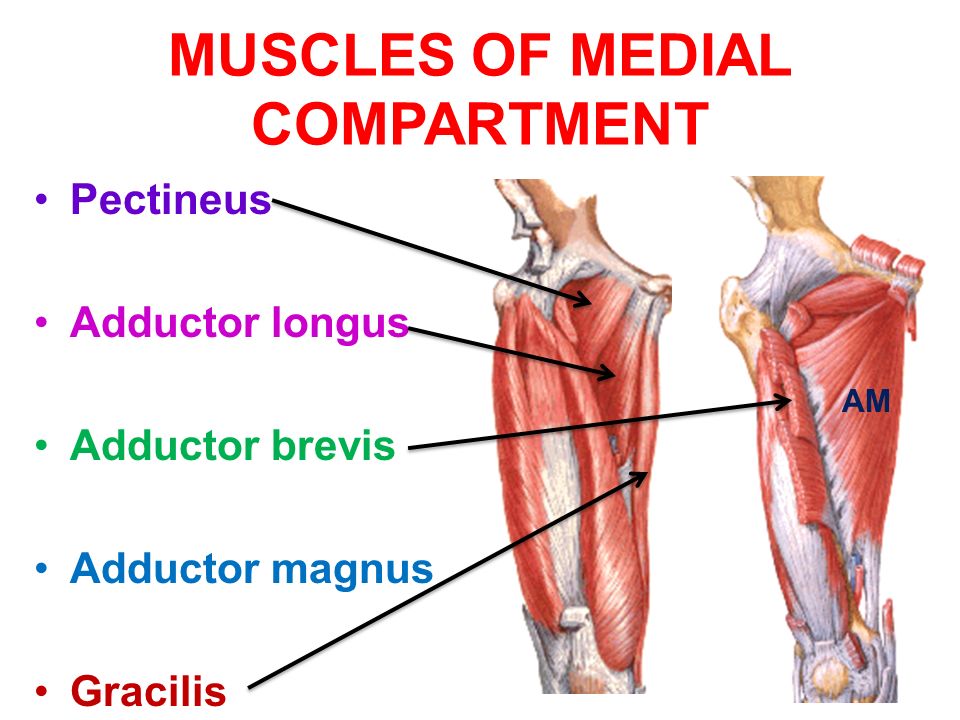
The adductor group of the thigh is made up of 5 muscles, in general that help you bring you leg back towards your other thigh (think squeeze), and as a decelerator (slowing you down) in running, cutting, and jumping.  Rehabilitation starts with ice, stretch, soft tissue mobilizations and massage, with a variety of modalities such as aquatic therapy, electrical stimulation, taping, and ultrasound.  Depending on the extent of the injury (grade 1, 2, or most severe 3), on field time lost will vary. 

 More on the adductor muscles can be found with a google search such as:
https://pressbooks.bccampus.ca/advancedanatomy1sted/chapter/muscles-5/


medial thigh muscles

Simple strengthening exercises are a great way to prevent groin injuries from limiting your performance.  Starting a routine several months before the season starts should be a great start to a successful season, competition, or run that 5k you have always wanted to run!

PTW has over 25 Doctors of Physical Therapy who can see you (no referral needed) for advice on preventing injury!


Robert Babb, PT, MBA
PTW is staffed with Physical Therapists who have earned the Direct Access Privileges (no prescription needed) at The Physical Therapy and Wellness Institute with locations in Lansdale, Quakertown, Montgomeryville, West Norriton, Glenside, Harleysville, Souderton, Hatfield, Horsham, Collegeville, and Royersford, PA.  Since 2002, PTW has helped folks achieve higher levels of function or performance providing evidence based care with industry best experiences.   

Refer yourself today at 215 855 9871 to see any of our PT providers for preventative help or help with your aches and pains, no prescription is needed.  


Tuesday, September 3, 2019

Did Andrew Luck Grieve?

A few NFL statistics for 2018 show 214 concussions, 131 Medial Collateral Knee ligament injuries, and 57 ACL tears.

https://www.playsmartplaysafe.com/newsroom/reports/injury-data/


What don't they show?

How many guys play hurt.  Soft tissue injuries.  Muscle strains.  Joint trauma.  Inflammation.  Painful joints.  Back pain.  Neck pain. 

Recently, a discussion led us to the Grieving process; happens when we go through Denial, Anger, Bargaining, Depression, and Acceptance with the loss of a loved one.

Seems kinda the same with the mentality of a Football player going through.

"Its only a swollen Knee, I'll be fine"
Denial

"F--- off, I only have a swollen knee" 
Anger

"If I get some rest from practice, the knee will be better for Sunday"
Bargaining

"I can't keep doing this, nothing good ever happens to me" 
Depression

"I think I will retire, I see a better life outside football" 
Acceptance

Its no wonder NFL players are retiring before 30 years old!


Thursday, August 15, 2019

A PT's Guide to PT School


The application process for getting into a doctoral program for physical therapy can be daunting. There are currently only 20 accredited PT schools in all of PA and less than 250 schools in the entire US, according to PTCAS (the common app for DPT school). While there are new schools gaining their accreditation every year, it is still very competitive to get into DPT school. I know this sounds scary, but don’t fret! This blog post is meant to help guide those of you who are applying to DPT school through the confusing and challenging application process and hopefully help ease your stress a bit!

Undergrad Schooling:
The first step to finding your perfect DPT school starts with finding your undergraduate school. Some of you have already completed this step: Congrats!! Others of you are currently looking into undergraduate programs and are completely overwhelmed with the info packets constantly arriving at
your house. Here is some advice: look at schools that offer 3+3 programs or assured admission programs. I got lucky in that my undergraduate school offered an assured admissions program, so as long as I met a list of criteria I was guaranteed admission into their DPT program. Though meeting this requirement was a challenge, it was still an advantage for me. It is not necessary to attend a school that offers these programs, but it is definitely an asset if they do!

Decide on DPT Programs:
For those of you already in undergraduate school, already graduated, or are coming from a different career path, the next step is deciding which DPT programs you want to apply to. Surprisingly, they are all very different from each other, and you want to make sure you are applying to programs that you think will help you be successful. Some schools work on a traditional class system, similar to undergrad. This is the most common format. Some schools, like the one I attended, employ a unit-based format where you integrate information from different “classes” together while focusing on a specific body part. Schools also differ in their clinical rotation requirements, different lab structures, etc. So look for the programs that you think you will help you be the most successful.

Completing Classes:
Now that you have your schools picked out, the next step is understanding the prerequisites courses. Surprisingly enough, while this is mainly consistent across schools (chem, bio, anatomy, etc), there are some differences between schools. Be sure to check out your schools’ requirements on their websites or on PTCAS to see what each school requires.
The GREs are the next hurdle. We all have our own opinions about standardized testing but put those aside because schools look at these scores. I have never been one for studying for a standardized test, but I did for this one and honestly the practice book was a life saver! Do practice questions, read about the essay formatting, take a prep course, whatever you need to be successful because the test is expensive and you don’t want to take it twice!

Shadowing:
My last piece of advice is about shadowing/observation hours. Get them early!! Schools have minimum requirements and you don’t want to be scrambling to get those hours in at the last minute! I would strongly recommend getting hours in an inpatient setting. Most applicants have a plethora of outpatient hours, but many overlook the inpatient setting. Some schools require it, but it will help not only set you apart but will also give you a better view into the wide variety of opportunities there are as a practicing clinician.

The most important thing to remember is that once you get into a DPT program, the competition is over. Your classmates will be your greatest asset and you will be surprised how much you end up relying on each other to make it through. You are entering a small but wonderful profession filled will so many great opportunities to help people who need you. So do not let the application process bring you down! It will all be worth it once you earn that DPT!

PTW’s Kaitlin McBryan , PT, DPT is a Staff Physical Therapist at our West Norriton and Montgomeyville clinics. For an initial evaluation, call Kaitlin at 610-630-0101  today! 

Tuesday, June 4, 2019

Full Count-Overuse Injuries in Baseball

The Importance of Pitch Counts in Baseball

Baseball season is in full bloom; from intramural level to major league to everything in between.  This season also brings a surge of throwing for youth sports.  With this surge of throwing, comes an increase in both shoulder and elbow pain.  According to the High School Sports-Related Injury Surveillance Study, the majority of shoulder and elbow injuries occurred in pitchers.  Twenty five percent of these injuries resulted in missed time and about eleven percent resulted in season ending injuries.

Due to the high prevalence of chronic overuse injuries experienced by pitchers, it is important to follow specific pitch count guidelines.  According to the National Federation of State High Schools, pitchers averaging eighty pitches a game result in being more than four times as likely to need surgery.  Pitchers throwing eight months during the year are five times more likely to receive surgery and pitchers who throw until fatigue regularly are thirty six times more likely to need surgery.  Along with these statistics, overuse injuries tend to occur most often in the first four weeks of the season, possibly due to poor conditioning in the off season.   

A simple pitch count recommended for high school includes: 1-25 pitches requires no day off from pitching, 26-45 requires one day off, 45-60 requires 2 days off, 61-85 requires 3 days off, and 86-110 requires 4 days off.  The pitcher should never exceed 110 pitches.  Additional measures to prevent shoulder and elbow injury include: watching for signs of fatigue (slower pitching and decreased correct form), avoiding pitching for multiple teams and overlapping baseball seasons, avoiding pitching and playing other positions in the same game, and performing in different sports.  This will prevent pitchers from straining one set of specific muscle groups. 

Finally and most importantly,  pitchers should never pitch through fatigue or pain until being medically evaluated (possibly by a physical therapist).  The Physical Therapy and Wellness Institute offers sports conditioning training to decrease the chances of overuse shoulder and elbow injuries especially in the first four weeks of the season.  If an injury does occur, our clinics have state of the art equipment to help you return to your full level of pitching prior to injury and help you stay in condition for future seasons.

PTW’s Bill Murrary , DPT is a Staff Physical Therapist at our Hatfield and Harleysville clinics. For an initial evaluation, call Bill at 267.932.9177  today! 

Thursday, May 2, 2019

Pain and the Older Adult

As we age, aches and pains tend to occur more frequently, last a little bit longer, and hurt a little bit more than they used to. A sore or stiff joint or muscle that we may not have thought twice about 5 years ago is now preventing us from living our lives to the fullest. As physical therapists, we are often asked by older adults in the clinic about various medical interventions that they hear about: “My sister told me viscosupplementation for her knee did wonders, should I go get it done?”, “My doctor told me I have arthritis, do I need a knee replacement?”, “I have diabetes, should I sleep upside down to reverse my neuropathy?” The reason we get so many questions is that there is such an influx of information from various sources that it becomes difficult to discern rubbish from solid medical advice.
One common source of health information older adults turn to for information is AARP’s monthly magazine. Its own editor-in-chief describes it as “the best-read magazine in America according to latest total audience stats.” Questions that I received regarding a particular article in April’s edition titled “The Latest Gains in Pain” led me to wish to summarize this article and offer any insights that I may.

The article states that many older adults live with chronic, daily pain without a specific cause or condition, because pain, as it explains, is its own disease. It is also incredibly common-about 1 in 2 individuals over the age of 65 suffer from chronic pain. It differentiates acute pain (which has the
purpose to avoid tissue damage) from chronic pain (which no longer has any physiological or survival purpose and hangs around after tissue healing ceases). Seemingly unrelated findings including stress, obesity, and anger can actually exacerbate symptoms, making what would be a minor ache feel like a major debilitating event. Lastly, the article supports the stance that often opiates are less effective than exercise and other non-pharmacological methods.

The statement that chronic pain can take place in the absence of an identifiable cause (having pain despite having no muscle tears or joint breakdown) is groundbreaking. This means you can have pain without a direct mechanical cause. Just because your arm hurts doesn’t mean your rotator cuff is torn; simply because your back hurts does not mean the degenerated disc found on your MRI (which could have been there for years without causing any problems) is directly causing your back ache. This finding gives hope for those who are living with daily OTC or prescription-pain killers for chronic pain just because your disc may still be affected does not mean your pain also has to stick around forever.

There is a plethora of new information coming out regarding pain science which aides to drive treatment and help those who are in pain every day of their lives. To those of us who may have seen this article in a widely distributed magazine, talk to your nearest healthcare provider (including the wonderful folks at one of the nearby 9 PTW locations) to get you back to living your best life.

PTW’s Matt Brennan PT, DPT is a Clinical Director at our Hatfield clinic. For an initial evaluation, call Matt at 215.855.3359 today! 

Wednesday, March 27, 2019

Think BIG! Physical Therapy for People with Parkinson’s Disease

How Physical Therapy Can Help Parkinson's Disease Patients

Any type of new medical diagnosis can be scary and confusing. In the fall of 2016, my grandfather began seeking answers for his slower movements and inability to participate in activities he used to love, such as chasing after all his grandchildren. After many doctor’s visits, he was diagnosed with Parkinson’s Disease. It was his difficulty coming to terms with the diagnosis which led me to search for what could best improve his symptoms and quality of life! After some research, I came across LSVT and knew that I needed to become certified and use my grandfather as my first test subject. As soon as I saw the positive results both physically and emotionally in my grandfather, I wanted to make sure I achieved those same results with all my patients.

What is LSVT BIG?
LSVT stands for “Lee Silverman Voice Treatment” and was developed in 1987 by Dr. Lorraine Ramig. She set out to improve Mrs. Silverman’s voice production by creating a standardized intervention that was later adapted from speech therapy into physical therapy. It incorporates all types of exercises that target key motor symptoms by using repetition that can drive changes in a person’s movement. This re-training of movement can strengthen weaker connections in the brain that are a result of changes due to the disease. The main goal of LSVT BIG is to “re-calibrate” how a patient perceives their motions by training them to recognize the amount of effort required to increase the amplitude of their mobility. It also helps with slower and smaller movements, impaired balance and coordination, forward leaning posture, and difficulties with activities of daily life.

How is it different than traditional PT?
This therapy is different than traditional PT because it is delivered specifically by an LSVT Certified Clinician.  Since it is a standardized program, backed by research, it is scheduled for 4 times a week for 4 weeks. It is also one-on-one with a physical therapist for 60 minutes so that constant feedback and cues can be given to the patient. The program also incorporates specific tasks to each patient that are important to them, or are currently difficult to them, that would be beneficial to practice daily.

When should I start?
The earlier the better! The best time to begin this program is in the early to middle stages of diagnosis. However, it is beneficial for all stages of Parkinson’s Disease and can be adapted to almost all levels of mobility. If you are unsure if this program is right for you or your loved one, please contact us and set up a consultation.

If you have questions or if you or someone you know has recently been diagnosed with Parkinson's Disease and would like to schedule an appointment with our LSVT BIG Certified Therapist Alex Taratuski, PT DPT call 215-855-1160 today!